
Context:
The alignment of electricity supply with population & industrial growth is key to the standard of living and future economic survival of George communities. However the decline in consumption of electricity via the municipal grid ( load shedding, alternative power generation) has an increasingly negative effect on the municipal main revenue stream. This has resulted in the introduction of fixed charges based on maximum wattage selected, leading to large sections of society being deprived of meaningful electricity supply. GRPA is awaiting a Cost of Supply report which will guide electricity tariffs especially given the12.7% increase granted to Eskom by NERSA.
The following graphs reflects significant increases in costs to members especially given investments made by individuals to reduce take off from municipal grit.
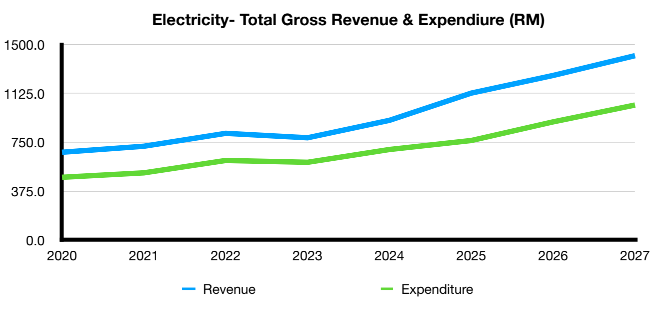
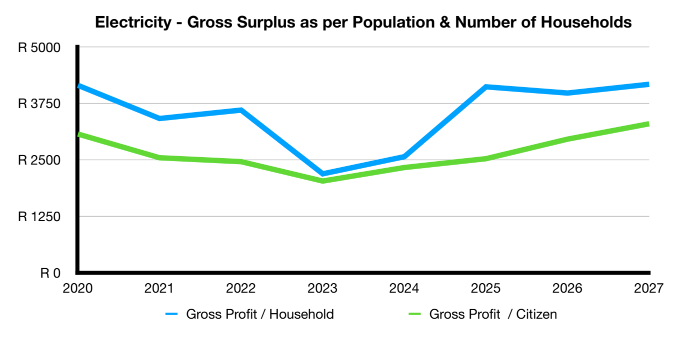
*Analysis is based on published financial statements and ratios are calculated based on some actual and derived data. While statistical data will improved as more data is being released, the reflected trends however are likely to be maintained
Outcomes:
- A meeting with Electrotechnical senior officials in December 24 created a better understanding and some clarity re infrastructure / grit requirements;
- Confirmation that cost of supply study has been received and is pending approval by National Treasury and will be made available to validate tariffs;
- Continued focus on introducing alternative energy commercial driven projects with lower cost profiles than Eskom.
Actions Planned:
- Questions raised via Annual Report re key indicators that indicate an low expenditure trend on infrastructure maintenance leaving the grit at risk remains outstanding but will be focused on a meeting with Finance in June;
- The cost of supply report legally required to base tariffs in will be requested for review by panel of advisors;
- The panel of advisors need to expanded given the diverse nature from SSMEG (solar) to bulk infrastructure and service delivery knowledge is required.



6 Responses
My Parents live on the property in a separate flat. They still want to be independent, so few years ago, put in a meter so they can buy there own electricity. But that has no caused 2 charges to our municipal bill. We pay a 60 Amp charge for main house & 40 Amp for there flat. Is this fair. I feel like disconnected the flats DV board so we just pay for 1
Gwen
Remember the availability charge is an extra tax that the municipality brought in. They did not have to do it, but in their wisdom, they decided that rate payers will just pay. It’s easier that toi-toing residents to deal with.
Secondly, your local ward councilor voted for the availability tax. They were fed incorrect information by some officials and then voted to tax you. They are NOT fighting it now for you.
Thirdly, the municipality is not doing much to stop the illegal electricity connections. I’ve been there many times and seen free water and electricity being used all the time
Andre Bruton
Street lights in Mann Street between 1st and 2nd and Botha Street are off almost continuously for over 2 months now. They ‘repair’ on for 2 to 3 days and then off again for weeks at a time.
Barry Schackleton
Most streetlights on permanently in Glenbarrie.Barrie Rd on since early May despite my reporting to Muni Electr Dept and our cncllr.
Liana Pettifer
Mike, One thanks for the comment & GRPA urge members to freely raise their opinions etc on the platform.
As for your comment that Sseg consumers are being unfairly treated, especially given their contribution to reduce the Eskom off grit demand, GRPA formally called on municipality to make available the cost of electricity supply report (legally required) to better understand the setting of electricity tariffs which should be equitable & affordable. Members will be updated in monthly newsletter & on website.
My concern is the unfair fixed tariff structure for 20A Capacity solar users.
Fixed cost non-solar: R0
Fixed cost solar: R246.34
Why should users be penalised for going solar (at great cost) when they help to reduce the load on the grid especially during the critical years when loadshedding was a regular occurrence and they also contribute to a reduction in hazardous air pollutants and global warming.
To be fair, all 20A Capacity users should treated the same.
The demand for residential solar has dived and jobs have been lost but a fair ruling might help to keep the demand ticking over especially with escalating Eskom tariffs due to billions outstanding from those who don’t pay.